Thanksgiving games need to work for children, adults and seniors in a room already full of food, conversation and movement. The best choices can pause when dinner is ready, require little physical speed and give every generation a useful role.
Use teams that combine ages, read instructions aloud and allow writing or speaking as alternatives. The goal is shared laughter, not identifying the fastest player.
15 Thanksgiving games for families
-
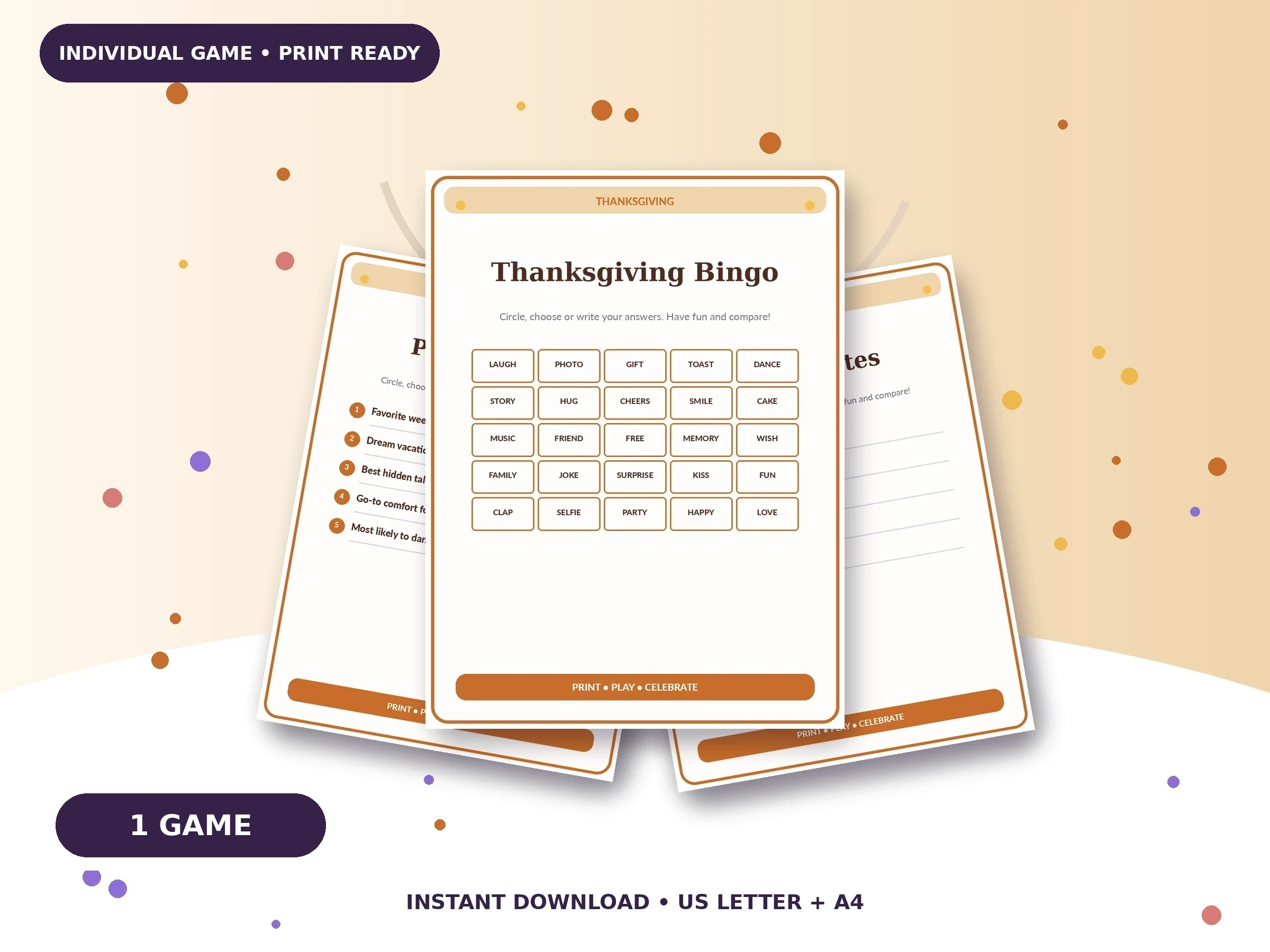
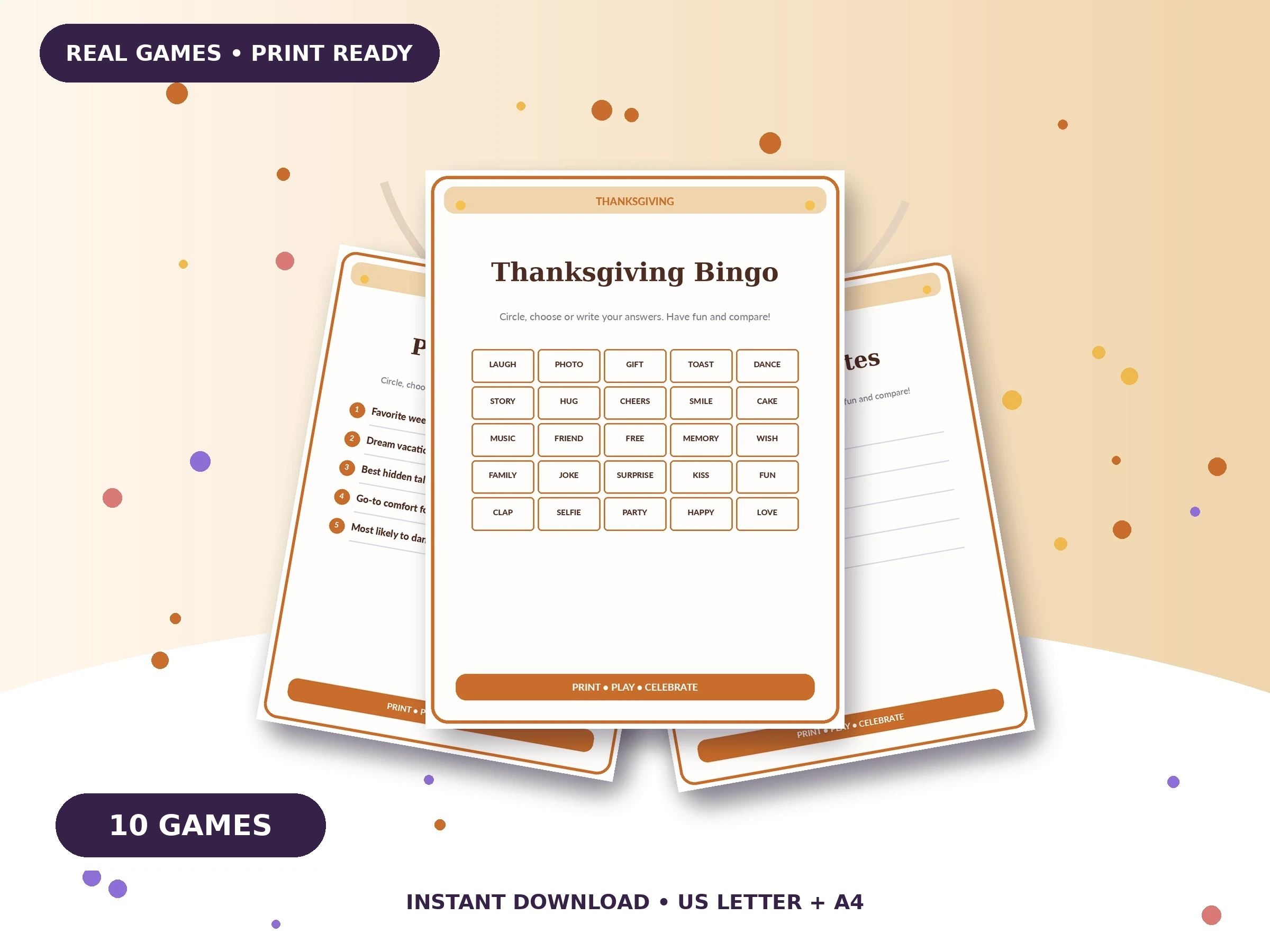
Thanksgiving Bingo
Use squares based on food, traditions and observable moments. Keep a few blank squares for family-specific details.
-
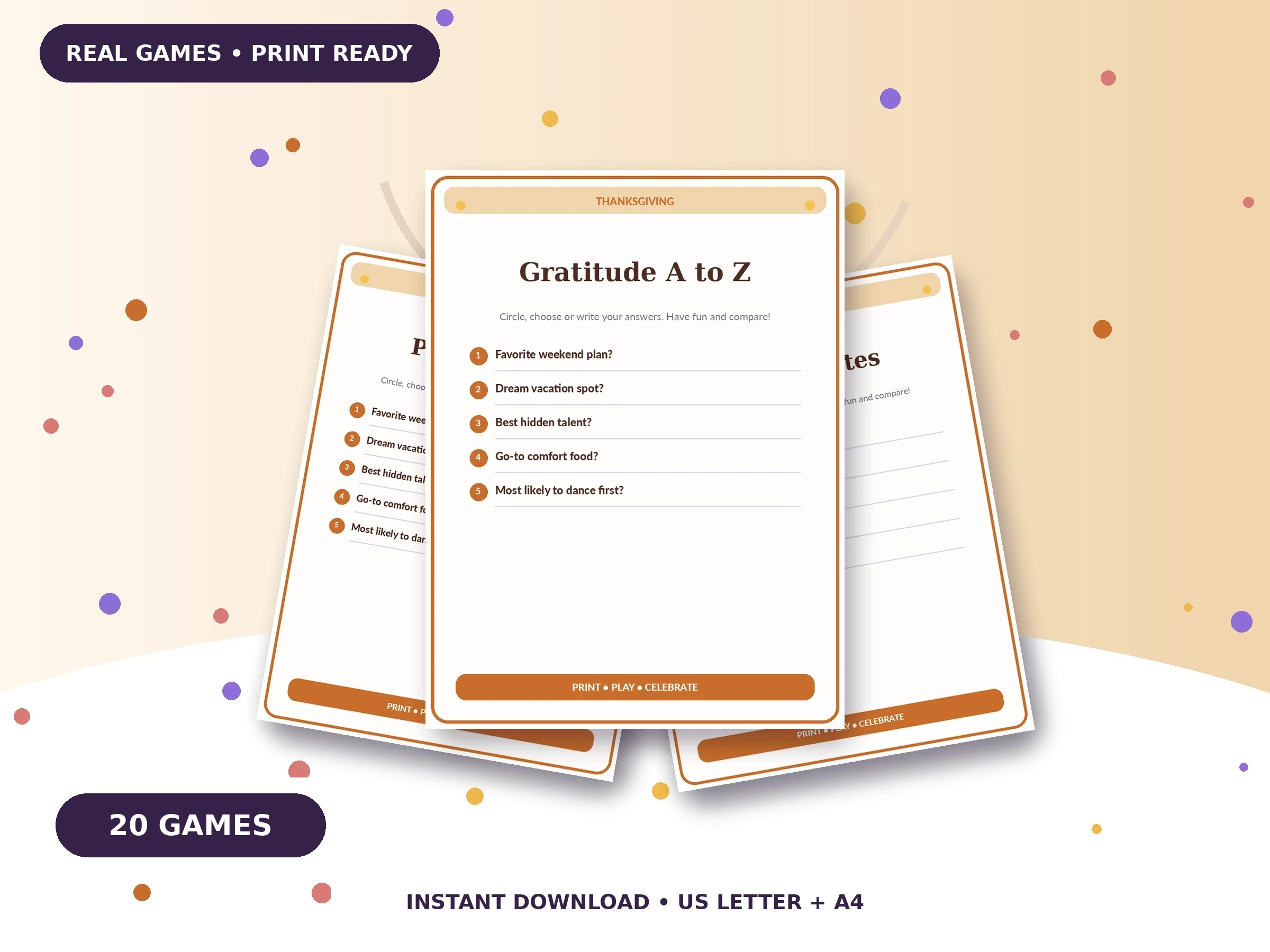
Gratitude A to Z
Teams write something they appreciate for as many letters as possible. Accept creative answers and skip difficult letters.
-
Family Memory Cards
Use prompts such as a holiday meal you remember, a family tradition worth keeping and someone who taught you something valuable.
-
Thanksgiving Would You Rather?
Use light choices about food, travel and seasonal activities. Guests can play by raising a card rather than moving around.
-
Who Said It?
Collect one fun fact from each guest before dinner. Read the facts and let teams guess the person.
-
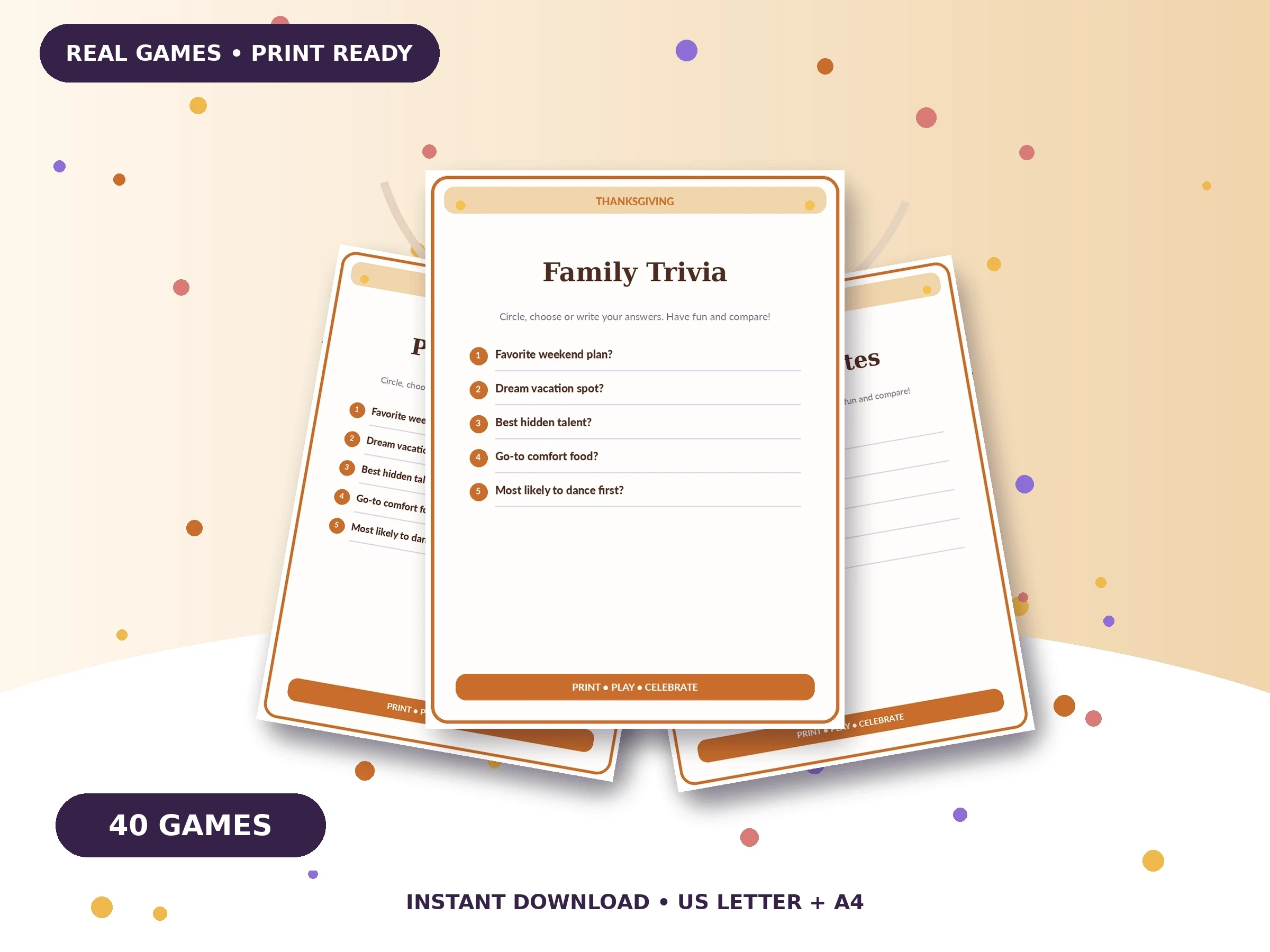
Family Trivia
Mix shared history with broad seasonal questions so newer guests can contribute.
-
Recipe Match
Match family dishes with the person who usually brings or prepares them.
-
Thankful Charades
Act out ordinary things people appreciate, such as a warm blanket, a pet or a good book.
-
Table Story Cards
Each table answers one thoughtful question between courses. Avoid making anyone share private experiences.
-
Guess the Dessert
List clues for familiar desserts or invite guests to identify ingredients in a tasting.
-
Family Photo Challenge
Capture generations together, cousins, siblings and a photo with the cook. Share photos privately.
-
Thanksgiving Word Scramble
Use a printed puzzle as a quiet activity before or after dinner.
-
One-Minute Categories
Name foods, traditions, fall activities or things found in a kitchen. Teams write rather than shout.
-
Gratitude Garland
Guests write short notes on paper leaves and attach them to a string or branch display.
-
Next-Year Prediction
Invite one hopeful prediction for the family to open the following Thanksgiving.
Adapt games by age
| Guest group | Helpful adaptation |
|---|---|
| Young children | Use pictures, team partners and shorter rounds. |
| Teens | Add photo prompts and current family trivia. |
| Adults | Mix conversation with light competition. |
| Seniors | Use large text, good lighting and seated play. |
| New guests | Include general seasonal questions, not only family history. |
Best timing around the meal
- Before dinner: Bingo, word scramble or Who Said It.
- Between dinner and dessert: Team trivia or categories.
- Open all day: Gratitude leaves, memory cards and photo prompts.
- Before departure: Read selected gratitude notes only with permission.
Prize ideas without overcomplicating the day
Use chocolate, tea, a puzzle, first choice of dessert or a small seasonal candle. Team prizes reduce intense competition and allow children to share the win.
Accessibility and comfort checklist
- Use at least 14-point printed text for seated games.
- Provide a firm writing surface at every seat.
- Read instructions aloud once without rushing.
- Offer team play to guests who prefer not to write.
- Avoid games that require standing quickly after a large meal.
- Keep prizes and supplies within easy reach.
Frequently asked questions
What if some guests do not celebrate Thanksgiving in the same way?
Use gratitude, food and family-connection prompts rather than assuming one tradition. General seasonal questions make the activities more welcoming.
Can games work during a buffet meal?
Yes, but place quiet activities at the table and wait until most guests have finished eating before starting a host-led game.
How do we avoid arguments during family trivia?
Ask one person to verify answers before the gathering, accept reasonable alternate wording and treat disputed questions as bonus conversation rather than a serious score issue.
Thanksgiving games are most successful when they help relatives learn something new about one another. Choose three formats, make them easy to pause and protect the relaxed rhythm of the meal.