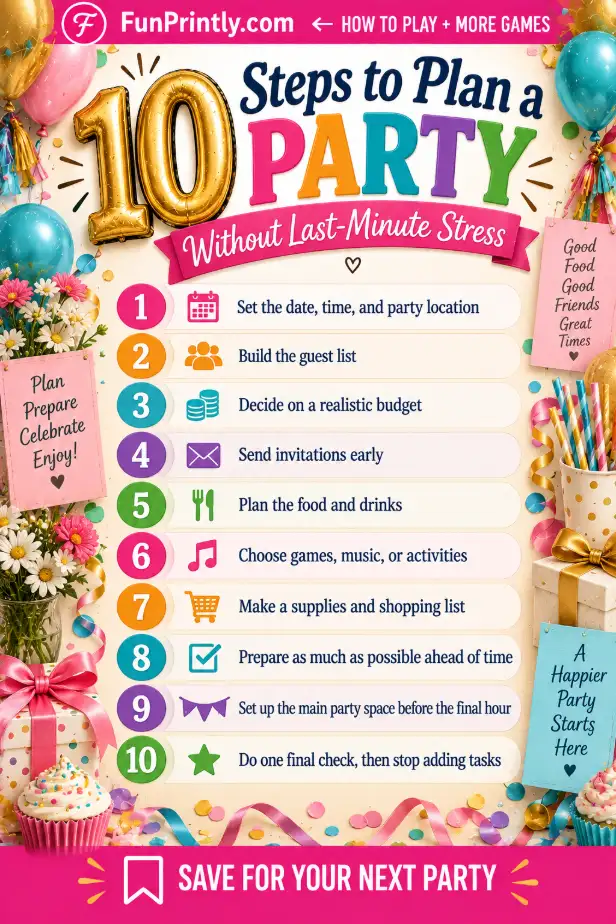
If you want to plan a party with less last-minute rushing, start by making the major decisions early and leave only simple finishing tasks for party day. These 10 steps work for birthdays, family gatherings, casual parties, and at-home celebrations, helping you organize guests, budget, food, activities, supplies, and setup in a sensible order.
The goal is not to make every detail elaborate. It is to decide what matters, prepare what you can ahead of time, and avoid creating extra jobs just before guests arrive.
How to Plan a Party in 10 Steps
1. Set the date, time, and party location
Start with the basic details that affect almost every other decision.
Choose the date, decide when guests should arrive and when the gathering will roughly end, and confirm where the party will happen. If you are hosting at home, think about which rooms or outdoor areas guests will actually use.
Making these choices first gives you a clear framework for invitations, food, activities, and setup.
2. Build the guest list
Create your guest list before buying supplies or planning a large menu.
Your expected guest count affects seating, food, drinks, activities, and how much space you need. Think about whether the party includes children, adults, families, classmates, or a mixture of groups.
You do not need a perfect final number immediately, but having a realistic estimate makes the rest of the planning easier.
3. Decide on a realistic budget
Choose how much you are comfortable spending before you start shopping.
Break the budget into the areas that matter for your event, such as food, drinks, decorations, activities, and any venue or equipment costs. Decide which parts deserve more of the budget and which can stay simple.
For a casual home party, good food and a comfortable gathering space may matter more than elaborate decorations. A clear budget also makes it easier to skip tempting extras that were never part of the original plan.
4. Send invitations early
Once the main details are settled, send invitations with the date, time, location, and any information guests need to know.
Ask for responses when an approximate head count will help with food, seating, or activities. If guests need to bring something, dress for an outdoor event, or arrive before a specific activity, include that information clearly.
Avoid waiting until the rest of the party is completely planned. Guests usually need the essential details first.
5. Plan the food and drinks
Plan your menu around the type of party, time of day, guest count, and amount of preparation you realistically want to handle.
Start by deciding whether you are serving a full meal, snacks, desserts, or a combination. Then estimate quantities using your expected number of guests and the number of different foods being offered.
Include drink options that suit the group, and remember practical details such as cups, ice, serving utensils, napkins, and a place for guests to set down food and drinks.
Whenever possible, choose at least some items that can be bought, prepared, portioned, or arranged before party day.
6. Choose games, music, or activities
Decide what guests will actually do during the gathering.
For a relaxed family party, conversation, music, and one or two easy games may be enough. A birthday or larger social event might benefit from several short activities that guests can join at different times.
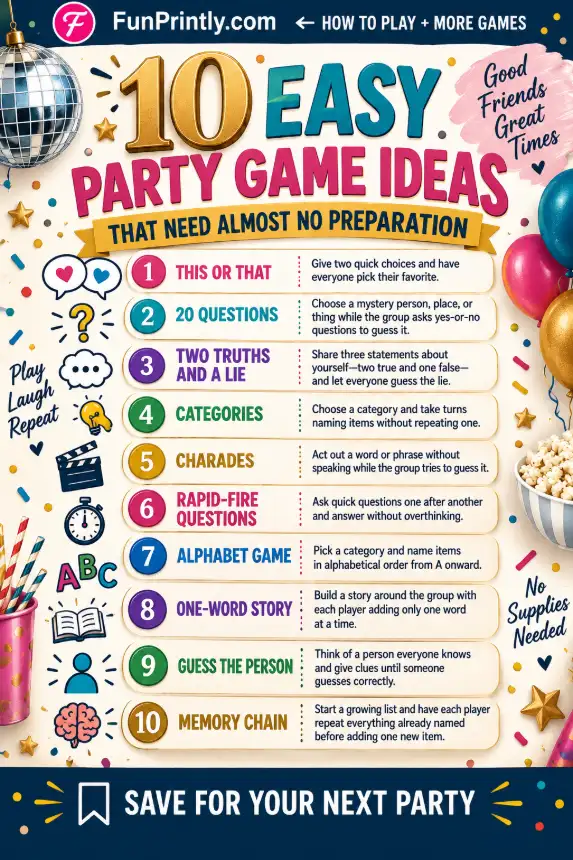
One phone can host many simple party games. Keep the game open, have one person read the prompts, or pass the phone around so different guests can lead.
When choosing party games, consider the ages in the group, available space, and whether guests know one another well. No-prep party games can be especially useful when you want entertainment without adding another large setup job.
7. Make a supplies and shopping list
Turn everything you have planned into one practical list.
Include food ingredients, drinks, serving supplies, decorations, game materials, cleanup items, and anything else the party requires. Check what you already own before buying duplicates.
Grouping the list by store or category can make shopping easier. It also helps prevent small but important items from becoming emergency purchases shortly before guests arrive.
If you like working from paper, this is one point where printing a personal party planning checklist can be useful, but a phone note works just as well.
8. Prepare as much as possible ahead of time
Move every task that does not need to happen on party day into an earlier time slot.
Several days ahead, you can confirm supplies, organize decorations, prepare game materials, check serving pieces, and buy nonperishable items.
The day before, handle suitable food preparation, arrange furniture when practical, put party supplies together, and charge any devices or speakers you plan to use.
The more finished tasks you can see before the event begins, the fewer decisions you will need to make while watching the clock.
9. Set up the main party space before the final hour
Do not save the entire room setup for the last few minutes.
Arrange the main gathering area, seating, activity spaces, serving tables, decorations, and obvious supplies as early as practical. If you are hosting outside, have an indoor or covered alternative in mind when conditions could affect the plan.
Shortly before guests arrive, the remaining jobs should ideally be simple ones such as putting out food, chilling or arranging drinks, turning on music, and making a quick pass through the guest areas.
A simple party schedule can help separate early setup from tasks that genuinely need to happen close to arrival time.
10. Do one final check, then stop adding tasks
Before guests arrive, walk through the party from a guest’s point of view.
Check the entrance, main gathering space, bathroom, food and drink area, seating, trash or cleanup area, and anything needed for planned games or activities.
Then stop creating new jobs.
This is not the moment to add another decoration project, complicated recipe, or extra activity simply because there are a few minutes left. If the essentials are ready, give yourself time to finish getting ready and welcome your guests.
What to Prepare Before Party Day
A useful way to plan a party is to separate tasks by when they truly need to happen.
Several days before the event, focus on decisions, shopping, invitations, supplies, and anything that can be prepared or organized early. The day before is a good time for suitable food preparation, room organization, game setup, and checking that important items are ready.
Shortly before guests arrive, concentrate only on tasks that cannot reasonably be finished earlier.
This approach also makes related planning easier. A party planning checklist can keep the overall event organized, while separate plans for choosing party games, building a party schedule, selecting no-prep party games, or deciding what to prepare the day before a party can handle the details without crowding one list.
Keep the Final Hours Simple
Good party planning is less about doing more and more about deciding earlier.
Follow the 10 steps in order, finish the essentials ahead of time, and keep party day focused on setup and simple finishing touches. Once the important jobs are done, resist adding unnecessary last-minute tasks and make space to enjoy the gathering too.
More Party Game Ideas
Keep playing with Party Game Ideas and 10 Easy Party Game Ideas That Need Almost No Preparation.