Holiday hosting gets easier when the big decisions are made in a sensible order.
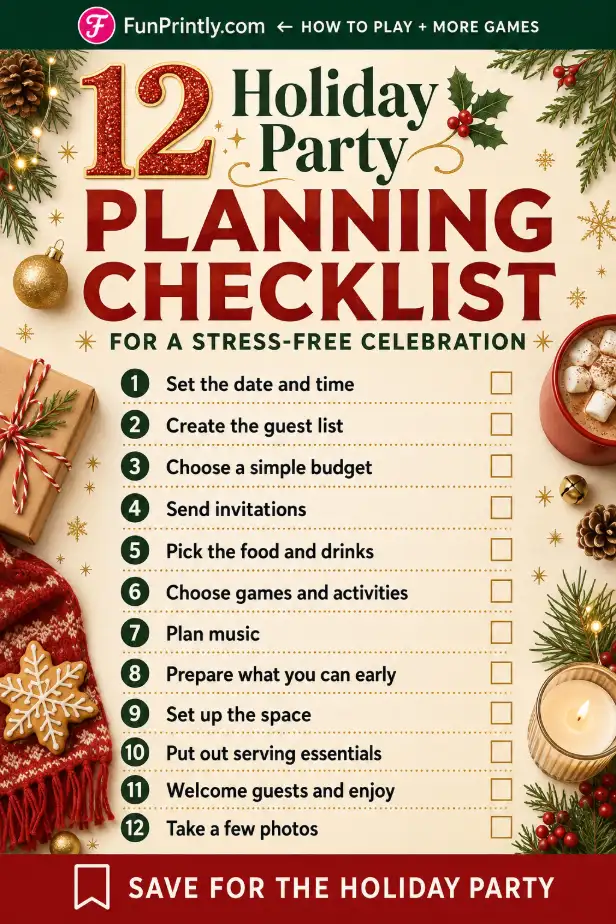
This practical 12-step holiday party planning checklist takes you from choosing the date through welcoming guests, with enough structure to keep preparation organized without turning the celebration into a project.
Use the full checklist from top to bottom, or revisit the steps that need the most attention as your party gets closer.
The 12-Step Holiday Party Planning Checklist
- Set the date and time
- Create the guest list
- Choose a simple budget
- Send invitations
- Pick the food and drinks
- Choose games and activities
- Plan music
- Prepare what you can early
- Set up the space
- Put out serving essentials
- Welcome guests and enjoy
- Take a few photos
Start With the Decisions That Shape Everything Else
The first few choices affect nearly every other part of your holiday party planning.
1. Set the date and time
Choose the date before getting too deep into menus, decorations, or activities.
Think about the kind of gathering you want to host. An afternoon open house will need a different food plan from an evening dinner or holiday game night.
A clear start time also helps guests understand what kind of event to expect.
If there is a firm end time, especially for a weeknight gathering, include that in your planning too.
2. Create the guest list
Your guest count influences the space, food, seating, drinks, and activities.
Make a realistic list based on how many people you can comfortably host rather than how many people you feel obligated to invite.
If children are included, note that while planning food and activities so you can choose options that work for the whole group.
3. Choose a simple budget
Your budget does not need to be complicated.
Decide what you are comfortable spending, then divide that amount across the areas that matter most to you, such as food, drinks, decorations, or entertainment.
It can help to choose one or two priorities and keep everything else simple.
A memorable holiday gathering does not require every part of the party to be elaborate.
Get the Guest-Facing Details Sorted Early
Once the basics are decided, move on to the things your guests need to know.
4. Send invitations
Send invitations once the date, time, location, and guest list are settled.
Include the practical details guests will need, such as whether the gathering is casual, whether food will be served, and whether they should bring anything.
If you need an RSVP for food or seating, give guests a clear response date.
Keeping the invitation simple can also reduce follow-up questions later.
Simplify Food and Entertainment Before They Become Big Jobs
Food, drinks, games, and music can take up a lot of planning energy if you leave every decision open.
Make a few clear choices and move on.
5. Pick the food and drinks
Choose a menu that fits the time of day, number of guests, and amount of cooking you actually want to do.
You do not need a large selection if a smaller menu is easier to serve well.
Consider combining homemade dishes with simple store-bought additions. Finger foods, make-ahead dishes, self-serve drinks, and desserts that can be prepared early can make holiday entertaining much easier.
Also think about how the food will be served. A buffet, snack table, or self-serve drink station may be more practical than trying to manage everything individually.
6. Choose games and activities
Decide whether your party actually needs organized activities.
For a lively gathering, you might plan one or two holiday party games and leave the rest of the evening open for conversation.
For guests who do not know each other well, holiday icebreakers or seasonal conversation games can help people settle in.
- Holiday icebreaker questions
- Christmas trivia
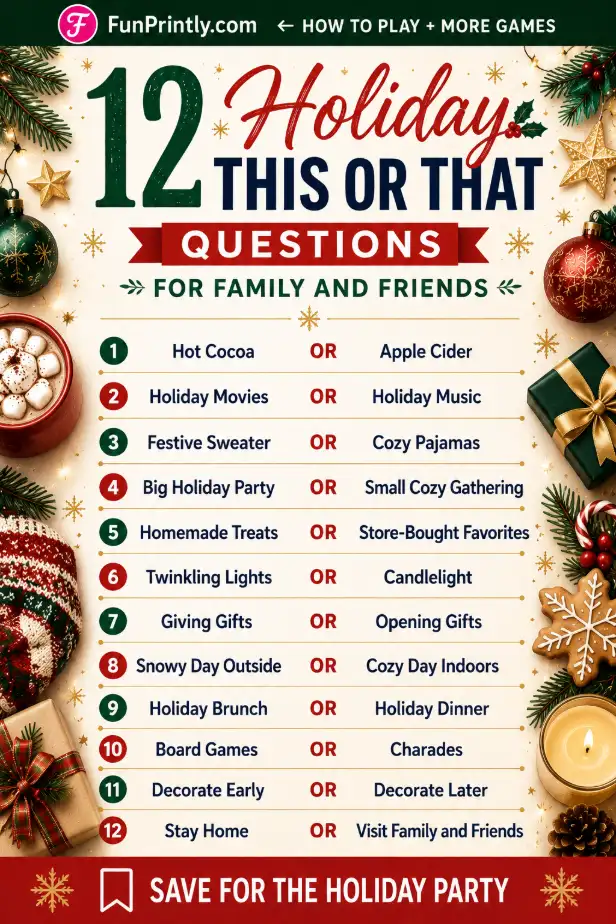
- Holiday This or That
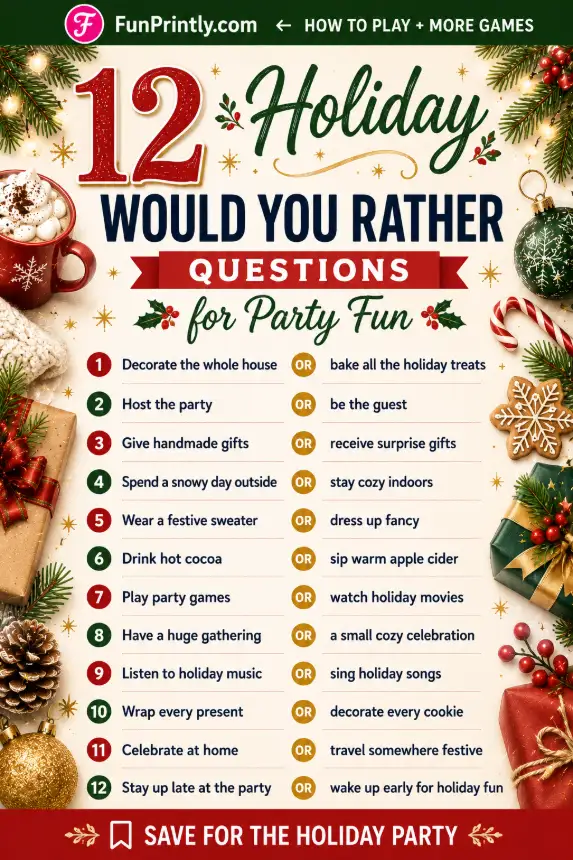
- Holiday Would You Rather
- Other holiday party games
Avoid planning so many activities that guests feel rushed from one thing to the next.
7. Plan music
Choose music before the party so you are not building a playlist while guests are arriving.
Think about the mood you want rather than trying to include every holiday song.
Background music should support conversation, not compete with it.
If your gathering includes games or a meal, you can also adjust the volume as the evening changes.
The Biggest Stress-Saver: Do Things Before Party Day
A useful holiday hosting rule is to ask, “Can this be done earlier?”
If the answer is yes, move it off the day-of list.
8. Prepare what you can early
Look at your menu, decorations, serving setup, and activities several days before the party.
You may be able to:
- Buy nonperishable food and drinks
- Prepare make-ahead dishes
- Chill beverages
- Gather serving dishes
- Organize game materials
- Choose music
- Clear clutter from the party area
- Set out decorations that will not be disturbed
Anything finished early is one less task competing for attention before guests arrive.
Set Up the Space for How People Will Actually Use It
A beautiful room is helpful, but a functional room matters more once people arrive.
9. Set up the space
Think through where guests will enter, put coats or bags, get drinks, sit, eat, and move around.
You may need to shift a chair, clear a surface, or create more standing room.
If you are serving food buffet-style, make sure guests can reach it without blocking a main walkway.
For games or activities, leave enough room for the group to participate comfortably.
A quick pass through the space from a guest’s perspective can reveal small problems before the party begins.
10. Put out serving essentials
Gather the things people will need before food is served.
That may include plates, cups, napkins, utensils, serving spoons, bottle openers, trivets, or extra trash bags.
Putting these items in obvious places reduces the number of questions you have to answer while hosting.
It also helps to keep a small backup supply nearby rather than storing everything in another room.
Once Guests Arrive, Stop Treating the Party Like a Checklist
Preparation matters because it gives you more freedom once the gathering begins.
11. Welcome guests and enjoy
When the party starts, shift from preparation mode to hosting mode.
Greet people, show them where food and drinks are, make introductions when useful, and let the gathering develop.
Not every detail will happen exactly as planned.
A game may get skipped. Dinner may run a little later. Guests may spend longer talking than expected.
That is usually fine.
The purpose of the planning was to make the event easier to enjoy, not to create a schedule that everyone has to follow.
12. Take a few photos
You do not need to document every moment.
Take a few photos when the group is together, when the table is set, or when something naturally feels worth remembering.
Then put the phone away and return to the party.
A handful of photos can be enough to capture the gathering without turning the host into the event photographer.
A Simple Timeline for Using the Checklist
You can make the 12 steps even easier by spreading them out.
A Few Weeks Before
Focus on:
- Date and time
- Guest list
- Budget
- Invitations
About a Week Before
Decide:
- Food and drinks
- Games and activities
- Music
- What can be prepared early
The Day Before
Handle as much setup as practical:
- Clear and arrange the party space
- Gather serving items
- Prepare make-ahead food
- Chill drinks
- Check game or activity plans
Before Guests Arrive
Finish only the tasks that truly need to happen that day.
Set out food and serving essentials, adjust the music, do a quick room check, and then stop adding new jobs.
Keep the Plan Proportionate to the Party
Not every holiday gathering needs the same level of preparation.
A small family dinner may only need a menu, music, and one easy game.
A larger party may benefit from clearer food stations, more seating, and a little more structure.
Use the checklist as a planning tool, not as a requirement to make every category elaborate.
The easiest holiday party to host is often the one where the important details are covered and the unnecessary ones are left alone.
Printing the Checklist Is Optional
If you like checking off tasks by hand, you can copy or print the 12-step checklist for personal use.
That is optional. Keeping the list open on your phone works just as well.
Plan Enough, Then Enjoy the Celebration
Good holiday party planning is less about doing more and more about making the useful decisions early.
Work through the checklist, simplify where you can, prepare what makes sense ahead of time, and leave yourself enough room to enjoy the people you invited.
More Holiday Party Games
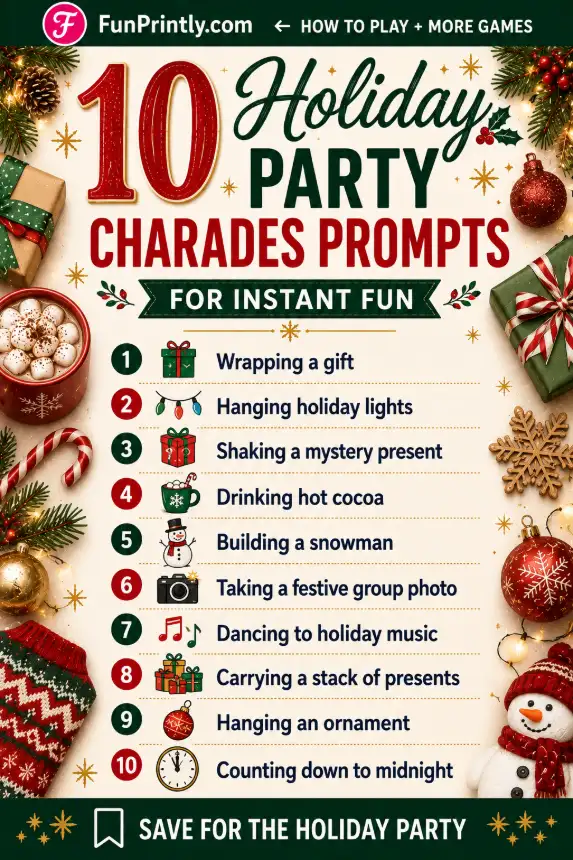
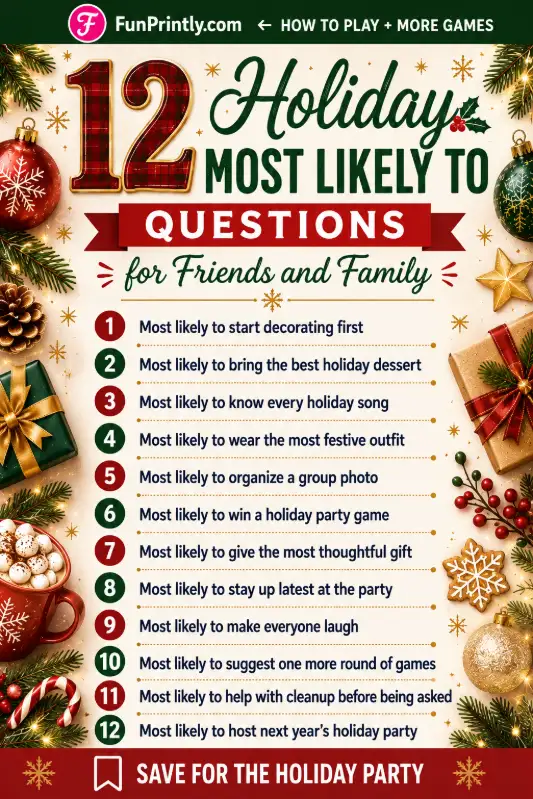
Keep playing with Holiday Party Games, 10 Holiday Party Charades Prompts for Instant Fun, 12 Holiday Most Likely To Questions for Friends and Family and 12 Holiday Would You Rather Questions for Party Fun.